
Plant Stages- More Important Than You Think

Do you ever wonder how we track the progression and the life of plants? Well, all plants have growth stages that dictate their nutrient, water, and light uptake as they progress. In the agronomy world crop growth stages are an important tool when analyzing the plants themselves. Each stage tells the agronomist something different and allows them to help the farmer with their crop strategy.
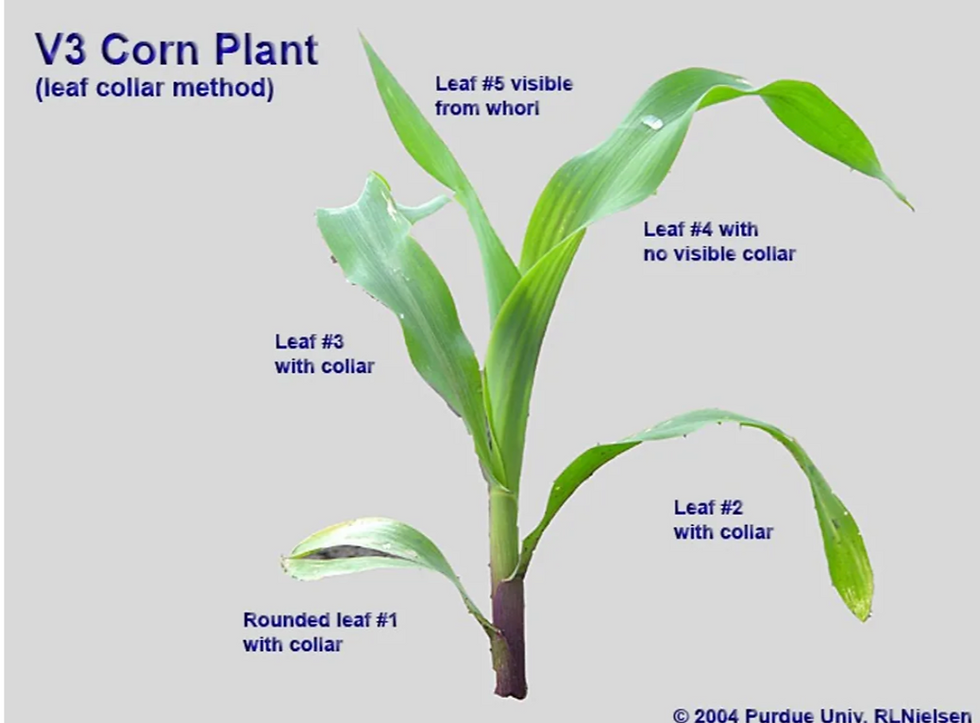
For this blog we are going to talk about the growth stages of corn, which is such a vital crop in the world today. The “young” stages of the crop are referred to as the vegetative stages (V) because the plant is mainly focused on the growth of the stem, roots, and leaves. There are three big vegetative stages for corn, and starting them off is V3. This stage is when the plant starts to rely on its own roots for energy instead of the seed that it has been using. When looking at the plant at this stage the agronomist is assessing the quality of the entire corn stand and seeing how well that plant will handle stress in the later growing stages.
After that comes V5 which has a lot going on! For starters this stage is when the growing point of the plant emerges above the soil (the part that creates new leaves and the tassel), which up till then it has been under the soil. The potential yield and number of kernel rows on the ears for the crop is also determined by this stage. Since the plant is going through such a big physiological shift nitrogen is such a vital nutrient at this time. That is why you see farmers driving through their corn fields when the corn is about shin high. This is typically called side dressing. So much growth happens at this stage and the plant uses 70% of that season's nitrogen uptake at this time. Sometimes you will hear farmers refer to this growth stage as the ugly duckling stage. The corn can look a little uneven and slightly yellow at this stage until the farmer applies the extra nitrogen fertilizer it will need to successful growth. V5 is also a critical time for farmers to evaluate the weed and insect pressure on the crop and assess what needs to be sprayed.

The last of the important vegetative stages is the window from V10-VT(tasseling). Another big rapid growth phase starts to take place at V10 because the plant is demanding maximum nutrients to start tasseling and producing the corn cob itself. V10 is typically when you apply fungicides to combat any diseases that can show up and hurt the final yield. This application will help improve stress tolerance right before VT (tasseling) which is the last of the important vegetative stages. Tasseling(VT) is a vital 2- to 3- day window where pollination takes place and reproduction begins. You want a successful pollination because that is determining the ultimate yield for that year's final crop.
Those corn plants have now lived half their life and now moved on to the reproductive (R) stages of their life. All stages are important, but three of them stick out on top. Starting with R1 which is considered the silking stage. If you don’t know what silks are, they are the little bunches at the end of an ear of corn that looks like hair. When those silks emerge that is how you know you are in R1. Those silks are important because each one is connected to a possible kernel of corn, but those silks need to be properly pollinated to develop.

Next R5 aka “dent” comes into play which is a grain filling stage. In this stage dry matter and starch are accumulating in each kernel which helps determine the final crop yield and weight once harvested. 65% of the total dry matter is actually determined during this stage which is why it is crucial to do whatever is needed to make sure the plant isn’t stressed. If those kernels don’t have what they need they will attempt to pull carbohydrates from the stalk which can make the stalk weak creating issues down the road. This is the stage at which most corn silage is made. You get the right amount of grain fill and moisture to ferment the forage.

After that dent stage the last big reproductive stage is R6 which is referred to as the black layer stage. It is called black layer due to a dark layer forming at the base of the kernel that cuts off the nutrient and moisture uptake from the plant. This cutoff of moisture drops the total plant moisture to around 30% which ends the risk of yield loss if there is a frost or another stressful event on the corn plant. Now that ear of corn starts to dry down to a moisture content that you can harvest. The industry standard to sell corn is at 15.5% moisture, so most farmers will wait until it gets drier unless conditions are not favorable for harvesting. If the crop isn’t at the right moisture the farmers will take it to their bin sites and mechanically dry it. You want everything to be dry when you harvest to avoid molding and other issues during storage in a grain bin or at an elevator.
All plants have growth stages and each one is similar and different at the same time. Plants are psychologically diverse which is what makes the growth stages different. We are working on learning all the ins and outs of the crops we are growing on our farm. Did you think a plant could be that complex?
Love,
Olivia, Tabby, Gina, & Kendra



Comments